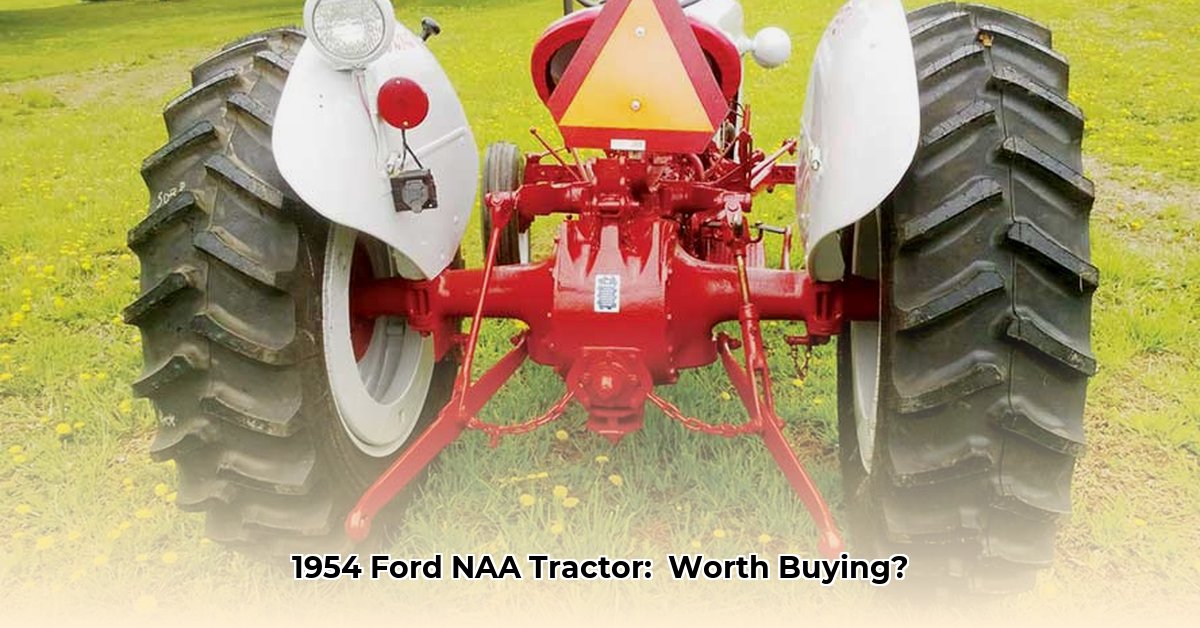
The 1954 Ford NAA tractor—a true icon of post-war agriculture—isn't just a machine; it's a piece of history. Over 129,000 of these iconic tractors were produced, a testament to their popularity and reliability. But what makes them so desirable for collectors today? This comprehensive guide delves into the NAA's history, specifications, market value, and provides a step-by-step buying guide for enthusiasts. For more information on Ford tractors of this era, check out this helpful resource: Ford Tractor Info.
A Blast from the Past: The NAA's Story
Imagine the post-war American landscape: farms rebuilding, technology advancing, and a pressing need for efficient machinery. The 1954 NAA perfectly met this demand. This compact tractor, with its distinctive design, quickly became a mainstay on farms nationwide. Its versatility, capable of handling a wide range of tasks, cemented its legacy. Stories abound of these tractors working tirelessly for generations, showcasing their resilience and robust design. Isn't it fascinating to consider the role this machine played in shaping post-war agriculture?
Under the Hood: Deciphering the NAA's Power
The heart of the NAA is a 2.2-liter, four-cylinder gasoline engine. However, you'll find conflicting information regarding its horsepower—estimates range from 20-30 horsepower to 33 horsepower. This discrepancy likely stems from varying testing methodologies of the era and potential minor engine variations across production years. Regardless of the exact figure, it was a powerful and reliable engine for its time. The transmission was similarly robust and straightforward, showcasing the sound engineering of the era. Its live hydraulic system further enhanced its versatility, simplifying the operation of various implements.
The Collector's Market: What's Your NAA Worth?
The 1954 Ford NAA commands impressive prices in the collector's market, but the value is heavily influenced by its condition and operational history. A pristine, well-maintained example, especially a rare 1953 "Golden Jubilee" edition, will fetch a premium. Auction results and online listings reveal a broad price range. However, condition isn't the only factor; a complete and verifiable history, including documented ownership and low usage, significantly impacts the final value. This is akin to investing in a classic car; provenance is just as important as condition. How much would you pay for a meticulously restored NAA with a documented history?
Your NAA Buying Guide: A Step-by-Step Approach
Ready to add a 1954 Ford NAA to your collection? Here's a structured approach:
Research: Understand the different NAA models and their variations. This knowledge informs your buying decision.
Pre-Purchase Inspection: A thorough inspection is crucial. Check for rust, mechanical issues (leaks, unusual noises), and the functionality of hydraulics and transmission. Seek a second opinion from a classic tractor mechanic if possible.
Documentation: Demand complete and verifiable documentation. A clear ownership history boosts value and assures peace of mind.
Negotiation: Research comparable sales to determine a fair market value, considering condition and documentation.
Support Network: Identify reputable parts suppliers and service providers before purchasing. Online forums dedicated to vintage tractors are invaluable resources.
Restoration and Maintenance: Keeping History Alive
Restoring and maintaining a vintage tractor requires dedication. Finding parts might be challenging—proactive planning is essential. Assess the structural integrity and mechanical components before starting a restoration. Engaging with online forums dedicated to Ford NAA tractors is strongly recommended, providing access to a wealth of knowledge and support from experienced enthusiasts.
Weighing the Pros and Cons: Is an NAA Right for You?
| Pros | Cons |
|---|---|
| Significant historical value | Parts sourcing may be challenging |
| High collector desirability | Restoration demands specialized skills/knowledge |
| Relatively simple mechanical design | Restoration can be expensive and time-consuming |
| Potential for significant appreciation in value | Limited modern features/comfort |
Owning a 1954 Ford NAA is about more than just machinery; it’s about owning a piece of agricultural history. While it requires commitment and resources, the rewards—both practical and emotional—are significant for the dedicated enthusiast.
How to Determine the True Horsepower of a Ford NAA Tractor
Key Takeaways:
- The Ford NAA's horsepower is debated due to variations in measurement methods.
- Original documentation rarely provides a precise horsepower figure.
- Accurate horsepower determination requires considering engine condition and testing methods.
- The NAA's power, while modest by modern standards, was substantial for its era.
- Understanding this historical context is crucial for valuing and appreciating the tractor.
The NAA's Power Puzzle: Unpacking the Horsepower Debate
The 1954 Ford NAA's horsepower is a point of discussion among enthusiasts. Why the uncertainty? Precise horsepower figures are elusive due to the less precise measurement technology of the time and varying factors influencing output (engine wear, carburetor settings, altitude). Different dynamometer methods further contributed to the inconsistencies. These discrepancies don't diminish the NAA's historical significance; rather, they highlight the technological context of its era.
Practical Assessment: Approximating Horsepower
While pinpointing the exact horsepower may be impossible, a reasonable estimate is achievable:
Visual Inspection: Examine the engine for wear, maintenance records, and modifications. A well-maintained engine performs closer to its rated output.
Original Documentation: Consult original manuals or brochures for any clues, however vague.
Professional Engine Testing: A dynamometer test provides the most accurate measurement. This requires professional expertise.
Comparative Analysis: Research horsepower figures from similar tested NAA tractors. Remember, several factors influence results.
Historical Context: Understand that the NAA's power should be evaluated within its historical context. Its performance was sufficient for the agricultural demands of the 1950s.
The NAA's Legacy: Beyond Horsepower
The NAA's value transcends simple horsepower figures. Its impact on agriculture is immeasurable, appreciated by collectors for its simplicity, history, and unique design. It represents a pivotal moment in agricultural mechanization. The NAA's story isn't just about numbers; it's a testament to innovation, resilience, and a transformative era in farming.